Why Is My Hair Falling? Common Causes of Hair Fall Explained
Some hair shedding is normal, but a clear increase in hair fall usually has a cause. Here are the most common reasons, from stress to scalp health.
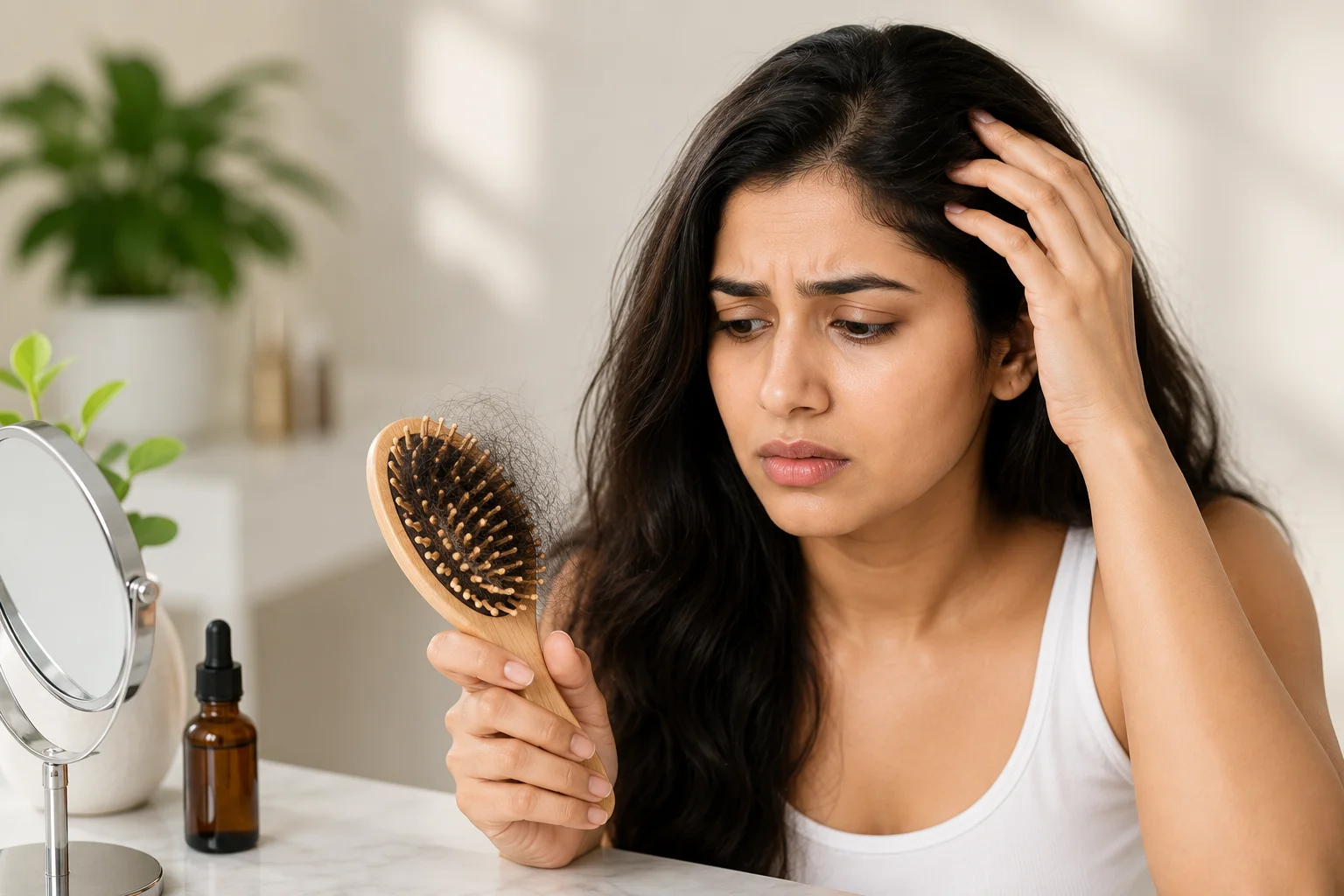
Some amount of hair fall is completely normal. Most people shed somewhere between 50 and 100 hairs a day as part of the natural hair growth cycle. It is when shedding noticeably increases, or when hair feels thinner over weeks or months, that it is worth understanding what might be going on.
Normal shedding vs increased hair fall
Hair grows in cycles, and at any time some hairs are resting or shedding while others are growing. Noticing a few hairs on your pillow or in the shower is normal. A clear increase in shedding, especially if it continues for weeks, is a signal that something has changed.
Common causes of increased hair fall
- Stress and major life changes. A stressful period, illness, surgery, or significant weight change can push more hairs into a shedding phase a few months later.
- Nutrition. Low iron, protein, vitamin D or B12 can affect hair growth, especially with restrictive diets.
- Hormonal changes. Pregnancy, postpartum periods, thyroid changes and certain hormonal conditions are common contributors.
- Scalp conditions. Dandruff, oiliness, or inflammation on the scalp can affect the hair growth environment.
- Hairstyling habits. Tight hairstyles, frequent heat styling, and harsh chemical treatments can contribute to breakage, which can look similar to hair fall.
The diet and nutrition link
Hair follicles are sensitive to nutrient deficiencies because hair growth is not essential for survival, so the body prioritises other functions first when nutrients are limited. A balanced diet with adequate protein, iron and vitamins supports healthier hair growth over time, though changes usually take a few months to become visible.
Stress and the hair growth cycle
Stress-related hair fall, sometimes called telogen effluvium, often appears two to three months after a stressful event, which can make the connection hard to notice at first. It is usually temporary and improves as the underlying stress resolves, though it can take several months for hair to look fuller again.
Scalp health and hair fall
A scalp that is very oily, flaky, or irritated can affect how comfortable the hair growth environment feels. Keeping the scalp clean and balanced is one of the more controllable factors in a hair care routine. Our guide to scalp care basics covers this in more detail.
When to see a dermatologist or trichologist
If hair fall is sudden, patchy, accompanied by scalp pain or itching, or continues for more than a few months without improvement, a dermatologist or trichologist can help identify the cause and suggest an appropriate plan, since the right approach depends on what is actually causing the shedding.
You Might Also Like
Explore dermatologist-formulated skin and hair care picks from our catalog.